
Join 60,000+ competitive exam aspirants
or with email
Your Cart
Subtotal₹0
Total₹0
Examoogle • User • info@examoogle.com • EE-2024-8821
Chapter 1 of 12 • Page 1 of 248🔒 Protected PDF • Watermarked
If ₹2,500 earns a simple interest of ₹500 at a rate of 5% per annum, how long was the money invested?
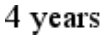
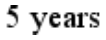
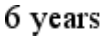
Question ID: 4410091248972 Option 1 ID: 4410094929075 Option 2 ID: 4410094929077 Option 3 ID: 4410094929078 Option 4 ID: 4410094929076 Status: Answered Chosen Option: B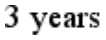
Since SI = ₹500 and 5% of ₹2,500 = ₹125 per year, simply divide ₹500 ÷ ₹125 = 4 years — no formula rearrangement needed!
Principal P = ₹2,500, Simple Interest SI = ₹500, Rate R = 5% per annum
SI=100P×R×T
Since SI = ₹500 and 5% of ₹2,500 = ₹125 per year, simply divide ₹500 ÷ ₹125 = 4 years — no formula rearrangement needed!
Students often forget to rearrange the formula or confuse the positions of P, R, and T, leading to wrong time values.
Step 1: Identify Given Values
We are given Principal (P) = ₹2,500, Simple Interest (SI) = ₹500, and Rate (R) = 5% per annum. We need to find Time (T).
P=₹2,500,SI=₹500,R=5%
Step 2: Apply the Simple Interest Formula
Using the standard formula for simple interest: SI equals principal times rate times time divided by 100.
SI=100P×R×T
Step 3: Substitute Values and Solve
Substituting the known values into the formula: 500 equals (2500 × 5 × T) divided by 100. Simplifying the numerator gives 12,500T/100 = 125T.
500=1002500×5×T=125T
Step 4: Calculate Time
Dividing both sides by 125: T equals 500 divided by 125, which gives exactly 4 years.
T=125500=4 years
A is correct because solving the simple interest formula yields exactly 4 years as the investment period.
This concept frequently appears in compound interest problems too — always identify whether the question asks for SI or CI first, as the formula differs significantly.
Get instant step-by-step AI explanations, full shift Previous Year Papers (SSC GD, RRB, SSC JE), and regional rank analysis on the official Examoogle App.
 Free Download • 100K+ Aspirants