
Join 60,000+ competitive exam aspirants
or with email
Your Cart
Subtotal₹0
Total₹0
Examoogle • User • info@examoogle.com • EE-2024-8821
Chapter 1 of 12 • Page 1 of 248🔒 Protected PDF • Watermarked
Riya deposited ₹5,000 in a bank at a rate of 6% per annum. What will be the simple interest earned after 3 years?
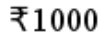


Question ID: 4410091248962 Option 1 ID: 4410094929037 Option 2 ID: 4410094929036 Option 3 ID: 4410094929035 Option 4 ID: 4410094929038 Status: Answered Chosen Option: C
Cancel zeros first: ₹5,000 × 6 × 3 ÷ 100 → remove two zeros from 5,000 to get 50 × 18 = 900. No calculator needed in under 10 seconds.
Principal P = ₹5,000, Rate R = 6% per annum, Time T = 3 years
SI=100P×R×T
Cancel zeros first: ₹5,000 × 6 × 3 ÷ 100 → remove two zeros from 5,000 to get 50 × 18 = 900. No calculator needed in under 10 seconds.
Students often multiply only P × R or forget to divide by 100, arriving at ₹18,000 or ₹9,000 instead of the correct SI of ₹900.
Recall the SI formula
The Simple Interest formula is SI=100P×R×T, where P is principal, R is rate %, and T is time in years.
SI=100P×R×T
Substitute the given values
Plug in P = ₹5,000, R = 6%, T = 3 years into the formula.
SI=1005000×6×3
Simplify the numerator
First multiply the numbers: 5000 × 6 = 30,000; then 30,000 × 3 = 90,000.
SI=10090000
Divide to find SI
Divide 90,000 by 100 to get the simple interest.
SI=₹900
C is correct because the calculated simple interest equals ₹900.
This same SI formula extends to compound interest problems where A=P(1+100R)T. Recognizing SI vs CI is a frequent pattern in bank exams like RRBGroup D.
Get instant step-by-step AI explanations, full shift Previous Year Papers (SSC GD, RRB, SSC JE), and regional rank analysis on the official Examoogle App.
 Free Download • 100K+ Aspirants