
Join 60,000+ competitive exam aspirants
or with email
Your Cart
Subtotal₹0
Total₹0
Examoogle • User • info@examoogle.com • EE-2024-8821
Chapter 1 of 12 • Page 1 of 248🔒 Protected PDF • Watermarked
Select the correct mirror image of the given figure when the mirror is placed at MN as shown below.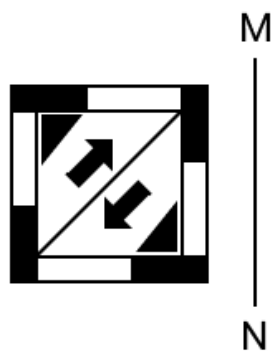
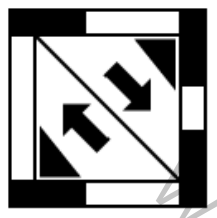
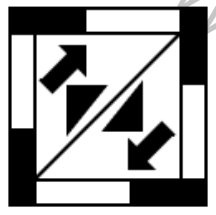

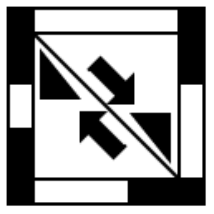
In mirror imaging, lateral inversion reverses left-to-right sides while keeping top-to-bottom constant. Mentally flip the left side features to the right, and the right side features to the left.
In mirror imaging, lateral inversion reverses left-to-right sides while keeping top-to-bottom constant. Mentally flip the left side features to the right, and the right side features to the left.
Analyze the mirror placement
The mirror is placed vertically on the right side (MN). Therefore, everything on the left of the image will shift to the right, and vice versa. Everything on the left side of the frame will appear reflected on the right side.
Evaluate internal elements
The diagonal line goes from bottom-left to top-right. In a mirror reflection, it will appear to go from top-left to bottom-right. The arrow pointing top-right will reflect to point top-left, and the arrow pointing bottom-left will reflect to point bottom-right.
Compare features with options
In the original, the black triangle is in the top-left section. In the mirror, it moves to the top-right section and reverses orientation. The original black triangle in the bottom-right section moves to the bottom-left. Only Option C matches this specific orientation and transformation.
A: The arrows and corner triangles are not correctly mirrored; B: The outer border patterns and internal shapes do not follow the horizontal reflection rule; D: The diagonal orientation is wrong and the internal arrows do not reflect correctly.
C is correct because it accurately represents the lateral inversion of all internal elements and frame borders when reflected across the vertical mirror line MN.
For mirror image problems, focus on one distinct component at a time (like the arrow direction or a corner triangle). Eliminating options that fail on even one single component is the fastest way to the correct answer.
Get instant step-by-step AI explanations, full shift Previous Year Papers (SSC GD, RRB, SSC JE), and regional rank analysis on the official Examoogle App.
 Free Download • 100K+ Aspirants