
Join 60,000+ competitive exam aspirants
or with email
Your Cart
Subtotal₹0
Total₹0
Examoogle • User • info@examoogle.com • EE-2024-8821
Chapter 1 of 12 • Page 1 of 248🔒 Protected PDF • Watermarked
Select the option in which the given figure is embedded (rotation is NOT allowed).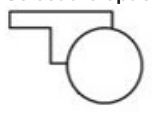
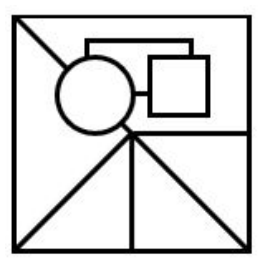
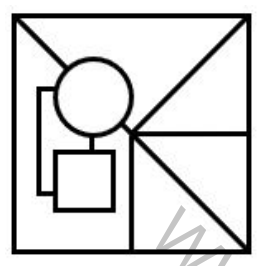
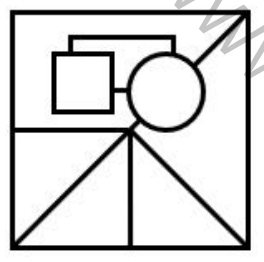
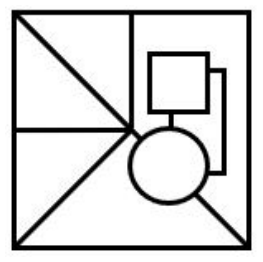
Look for the specific L-shaped connector attached to the circle and square; scan the corners of the target grid to match this fixed orientation without rotation.
Look for the specific L-shaped connector attached to the circle and square; scan the corners of the target grid to match this fixed orientation without rotation.
Analyze the source figure
The source figure consists of a circle and a rectangle/square connected by an L-shaped line. The L-shape starts from the top of the rectangle, moves horizontally left, then moves vertically down, connecting to the side of the circle.
Evaluate the options
By checking each option, we look for the identical geometric relationship. In Option C, we see that the square is on the left, the circle is on the right, and the connecting line originates from the top of the square, travels left, and descends to the circle, perfectly matching the source structure.
A: The connector orientation is inverted/mirrored incorrectly; B: The connector is attached to the bottom instead of the top; D: The connector is positioned on the right side of the shape, which is a reflection and not the original structure.
C is correct because the embedded figure matches the source shape's geometric configuration of a square-to-circle connection via an overhead L-shaped link exactly as provided in the target diagram.
For 'Hidden Figure' questions, focus on unique, non-symmetrical vertices or lines first; they are much harder for examiners to hide perfectly across multiple options.
Get instant step-by-step AI explanations, full shift Previous Year Papers (SSC GD, RRB, SSC JE), and regional rank analysis on the official Examoogle App.
 Free Download • 100K+ Aspirants