
Join 60,000+ competitive exam aspirants
or with email
Your Cart
Subtotal₹0
Total₹0
Examoogle • User • info@examoogle.com • EE-2024-8821
Chapter 1 of 12 • Page 1 of 248🔒 Protected PDF • Watermarked
Join 60,000+ competitive exam aspirants
What is the chemical combination formula of Plaster of Paris?
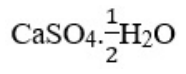
Plaster of Paris, chemically known as calcium sulfate hemihydrate, is produced by the controlled heating of gypsum. Its chemical formula is CaSO4⋅21H2O.
Plaster of Paris, chemically known as calcium sulfate hemihydrate, is produced by the controlled heating of gypsum. Its chemical formula is CaSO4⋅21H2O.
Think of it like a 'reset' button: you take a solid crystal, remove most of the water to create a fine powder (plaster), and when you add water later, it 'remembers' its original form and hardens back into a solid shape.
Remember 'POP' for Plaster of Paris: 'Half a water, hard in a snap'.
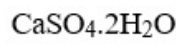
CaSO4⋅2H2O — Gypsum (Chemical raw material)
CaSO4⋅21H2O — Plaster of Paris (Hemihydrate)
When gypsum (CaSO4⋅2H2O) is heated at a temperature of approximately 373 K (100°C), it loses three-fourths of its water of crystallization to form plaster of Paris. If heated above 373 K, it loses all its water to become 'dead burnt plaster' (anhydrous calcium sulfate). When mixed back with water, it rehydrates to form hard gypsum again, which is why it is used for casting and molding.
Plaster of Paris is calcium sulfate hemihydrate.
It is prepared by heating gypsum at 373 K.
It has a rapid setting time when mixed with water.
The reaction is CaSO4⋅21H2O+121H2O→CaSO4⋅2H2O (setting process).
Sets quickly into a hard mass.
Excellent for casting intricate details.
Fire-resistant properties.
Once hardened, it cannot be turned back into a moldable paste easily.
Must be stored in moisture-proof containers to prevent premature setting.
Fixing fractured bones in orthopedic casts.
Making decorative statues, toys, and architectural moldings.
Option A (CaSO4⋅2H2O) is Gypsum.
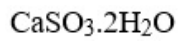
Option C (CaSO3⋅2H2O) is Calcium Sulfite Dihydrate.
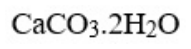
Option D (CaCO3⋅2H2O) is not a standard stable compound.
The hemihydrate notation can also be written as (CaSO4)2⋅H2O.
B is correct — Plaster of Paris is calcium sulfate hemihydrate represented by CaSO4⋅21H2O.
Always distinguish between Gypsum (dihydrate) and Plaster of Paris (hemihydrate); exams often swap the water stoichiometry to test your precision.
Get instant step-by-step AI explanations, full shift Previous Year Papers (SSC GD, RRB, SSC JE), and regional rank analysis on the official Examoogle App.
 Free Download • 100K+ Aspirants